


Standards & Publications
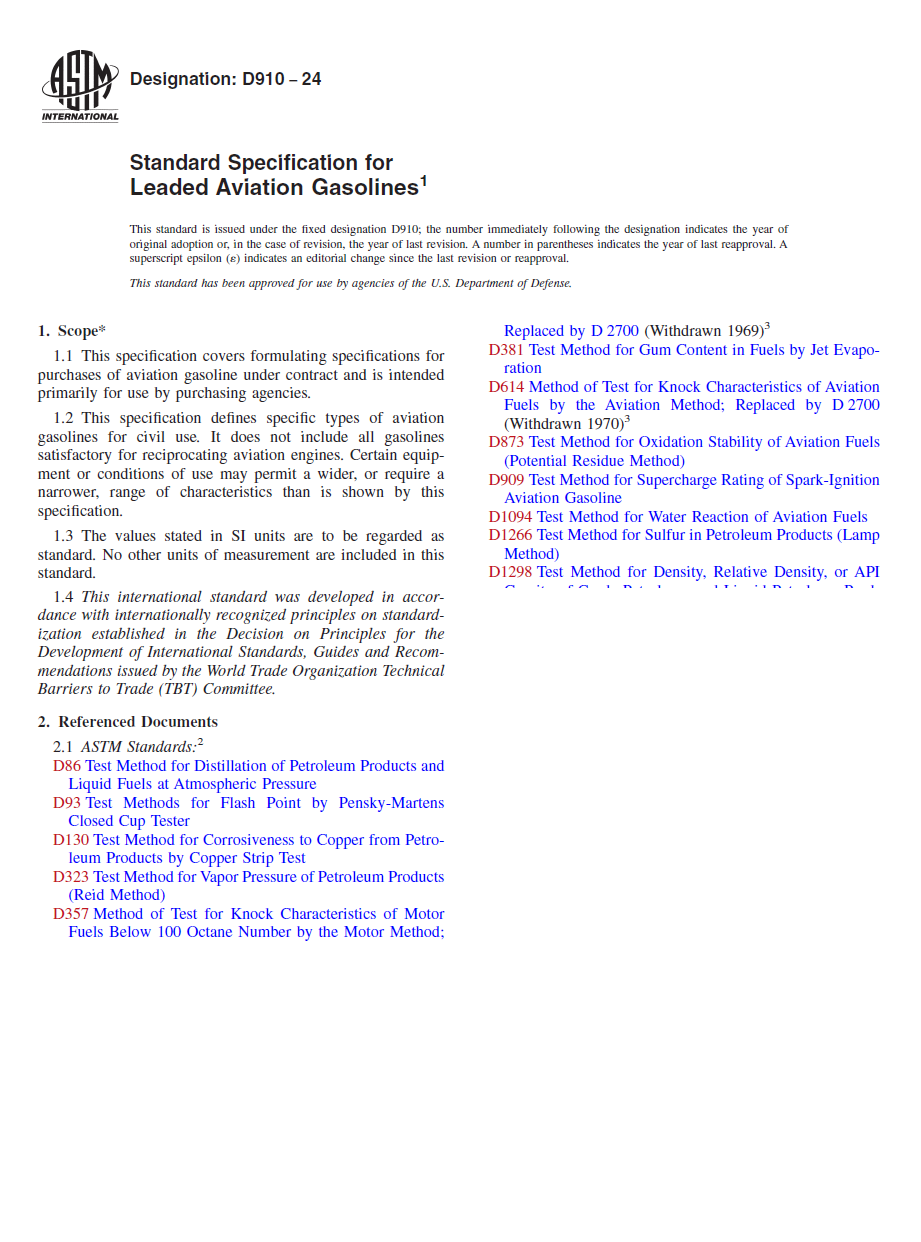

This specification covers purchases of aviation gasoline under contract and is intended primarily for use by purchasing agencies. This specification does not include all gasoline satisfactory for reciprocating aviation engines, but rather, defines the following specific types of aviation gasoline for civil use: Grade 80; Grade 91; Grade 100; and Grade 100LL. The gasoline shall adhere to octane rating requirements specified for individual grades, as follows: lean mixture knock value (motor octane number and aviation lean rating); rich mixture knock value (octane and performance number); tetraethyl lead content; color; and dye content (blue, yellow, red, and orange). Conversely, the gasoline shall meet the following requirements specified for all grades: density; distillation (initial and final boiling points, fuel evaporated, evaporated temperatures); recovery, residue, and loss volume; vapor pressure; freezing point; sulfur content; net heat of combustion; copper strip corrosion; oxidation stability (potential gum and lead precipitate); volume change during water reaction; and electrical conductivity.