


Standards & Publications
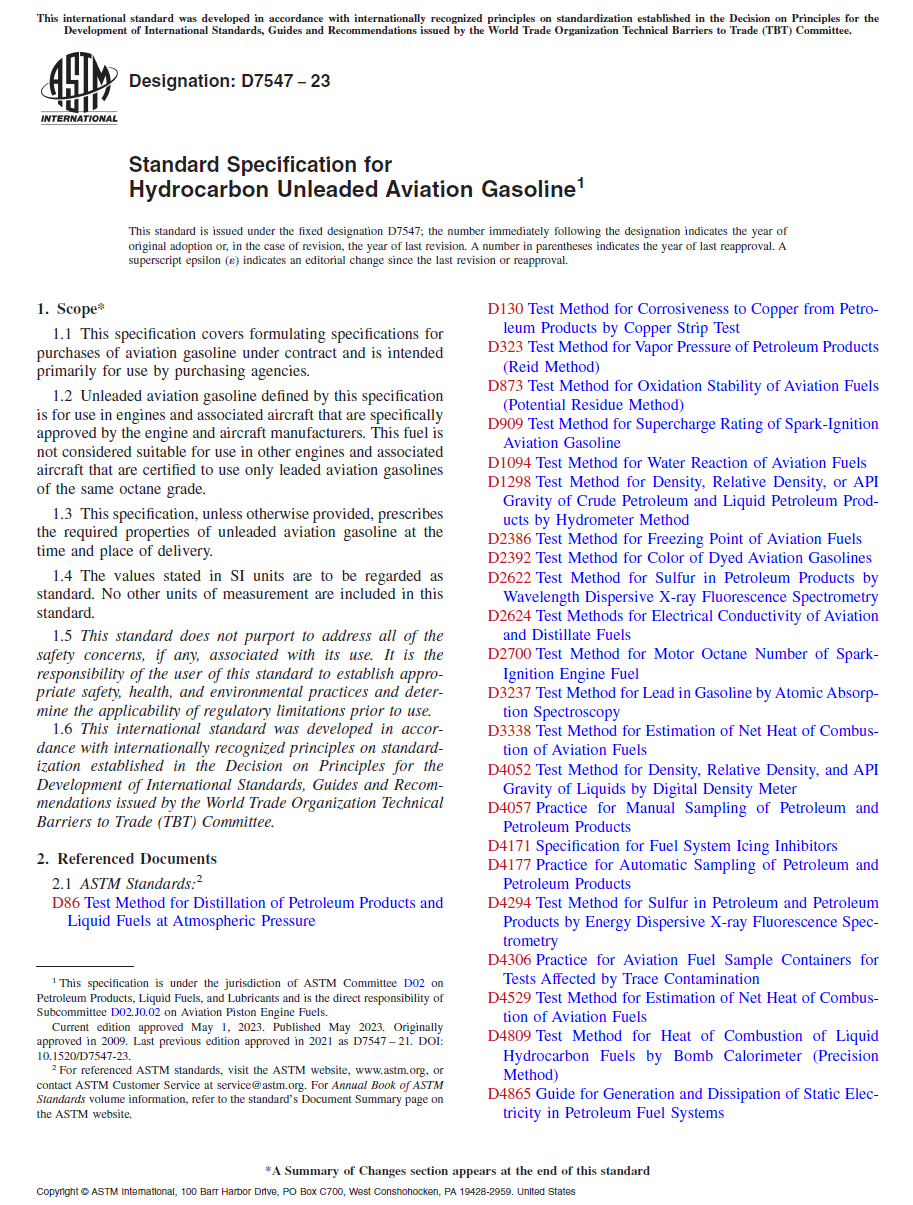

This specification establishes the requirements for purchases of Grade UL 91 unleaded aviation gasoline under contract and is intended primarily for use by purchasing agencies. It does not cover any other gasolines satisfactory for reciprocating aviation engines. The unleaded aviation gasoline, except as otherwise specified here, shall consist of blends of refined hydrocarbons derived from crude petroleum, natural gasoline, or blends thereof, with synthetic hydrocarbons or aromatic hydrocarbons, or both. Additives for electrical conductivity and corrosion inhibition, as well as certain types of antioxidants may be added separately, or in combination, in specified compositions and concentrations. Properly sampled specimens shall undergo test procedures and conform, accordingly, to the following requirements: knock value (motor octane number); density; distillation (initial boiling point, fuel evaporated, and final boiling point); recovery, residue and loss volumes; vapor pressure; freezing point; sulfur content; net heat of combustion; corrosion (copper strip); oxidation stability (potential gum); water reaction (volume change); and electrical conductivity.